
From the West Indies to World War I:
Stories from No. 2 Construction Battalion and Black Soldiers
Sergeant Edward Sealy (1876 – 1949):
The Senior Sergeant Only
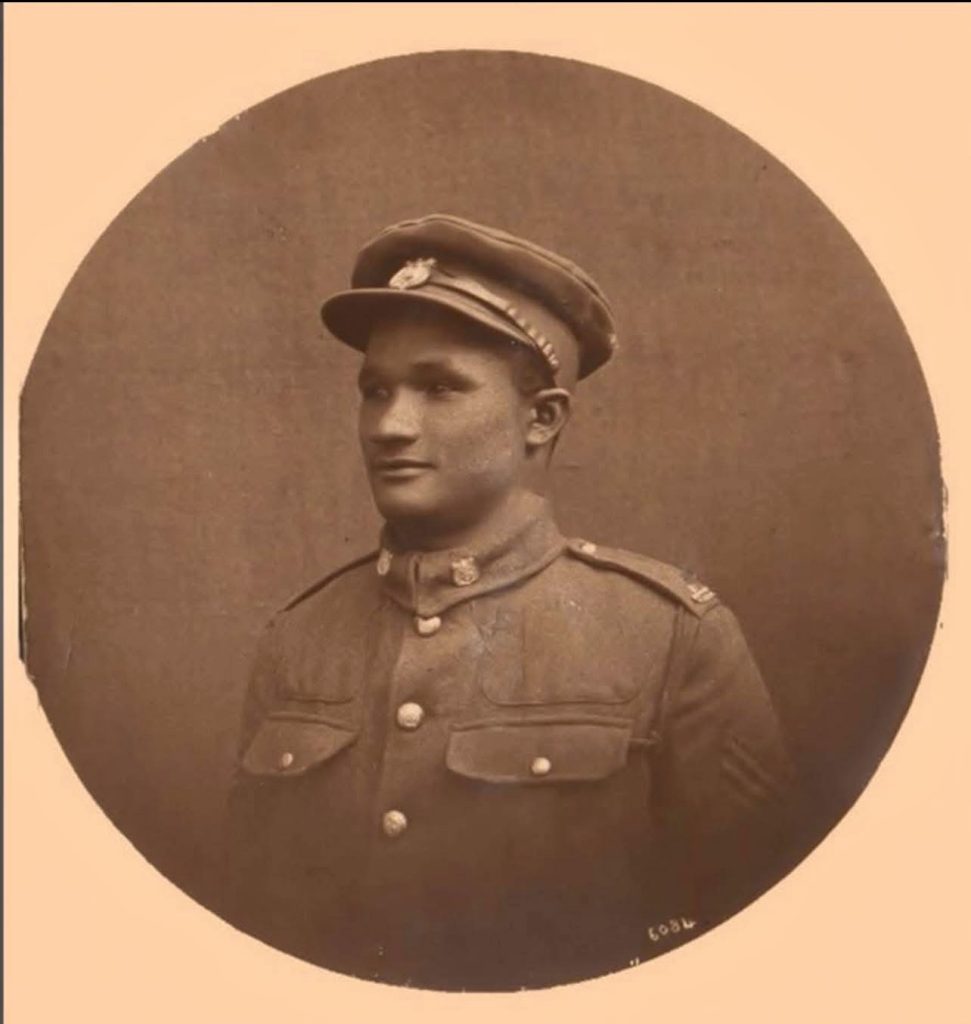
Biography
One of the oldest members to enlist in No. 2 Construction Battalion was Edward Sealy. Born 4 March 1876 in Barbados to James Sealy and his wife Elizabeth (née Best), Edward was the second Sergeant appointed in the battalion and became known for his cool demeanour.
Edward Sealy arrived in St. John’s, Newfoundland, on 30 June 1914, bound for Sydney, Nova Scotia. He indicated that he was arriving as a tourist and listed his occupation as a cooper, or barrel-maker. On 18 July 1916, recruiting started for No. 2 Construction Battalion. Three days later, Sealy enlisted in Halifax; only nine members joined the unit before him.
Service was a tradition in Edward’s family. Sealy had served 12 years in the West India Regiment – a Black regiment of the British Army, consisting of Black soldiers from the Caribbean and commanded by white officers. In 1916, his brother Adolphus was a Sergeant in the Trinidad Constabulary.
By mid-August 1916, the battalion’s Pictou barracks contained more than 160 soldiers. As a greater chain of command was required for this number, Sealy was made a Sergeant on 18 August 1916. At 5 feet 11 inches (180 cm), Edward was taller than most enlistees. While his size may have helped with the duties of his rank, so would the calm air of authority about him. When the battalion formed its Companies, Edward became one of A Company’s three initial non-commissioned officers.
On 22 January 1917, the battalion sent the first of two Companies to remove railway track from National Transcontinental Railway (NTR) sidings in New Brunswick. Sealy was the lone Sergeant and the senior non-commissioned officer with 114 men under his charge and reported to Lieutenants Livingston and Barnhill. The detachment operated near Napadogan, north of Fredericton. The working conditions there were the worst that the battalion would face as the CGR provided inadequate rail-based housing and personnel did not have appropriate clothing.
Once No. 2 Construction Battalion arrived in England in April 1917, ranks were subject to change. Sealy was appointed Acting Sergeant with pay on 17 May, shortly before the reduced battalion departed for France. It was only on 21 September 1918 that the rank was confirmed, a standard military practice.
Sergeant Sealy spent his entire time in France at Jura, near the Swiss border. As a Sergeant, he did not do any physical work. Rather, he was responsible for supervising the unit’s personnel, ensuring their safety as well as meeting the needs of the soldiers under his command. Sealy was also the first line of discipline and performed the duties of Orderly Sergeant.
One month after the signing of the 11 November 1918 Armistice, the battalion returned to England. By the end of December, its personnel were stationed at the Canadian Repatriation Depot, Kinmel Park, Wales, awaiting return to Canada. Here, Sergeant Sealy played a central role in a racist incident that occurred on 7 January 1919.
Sealy was marching a group of No. 2 Construction Battalion’s soldiers to a bath parade when a white non-commissioned officer interfered with the group’s line of march. Sealy had him arrested, but other white soldiers intervened and a fight ensued. A very racist report later claimed that fault lay with members of No. 2 Construction.
On 12 January 1919, Sealy and a large group of the battalion’s soldiers returned to Canada aboard SS Empress of Britain. Upon arriving in Halifax on 22 January, they were given short leaves and then returned to duty for discharge.
Edward Sealy was discharged on 13 February 1919. Shortly afterward, he was able to gain employment with Canadian National Railways as a porter on its passenger trains. He continued in this role until retirement. In 1921, Edward’s income was $900 a year. By 1931, his salary had risen to $1,280. In comparison, he earned $1.50 a day—$547.50 a year—as a Sergeant.
On 10 June 1920, Edward married Maria Richardson. The newlyweds rented a house at 153 Creighton Street, Halifax. A year after Maria’s 1 October 1936 death, Sealy married Izie Dora White in a ceremony that took place in the Cornwallis Baptist Church, Halifax, on 15 October 1937. He had no children by either marriage. Edward Sealy died at home on 15 February 1949 and was buried in Camp Hill Cemetery, Halifax.
Additional Research Outcomes
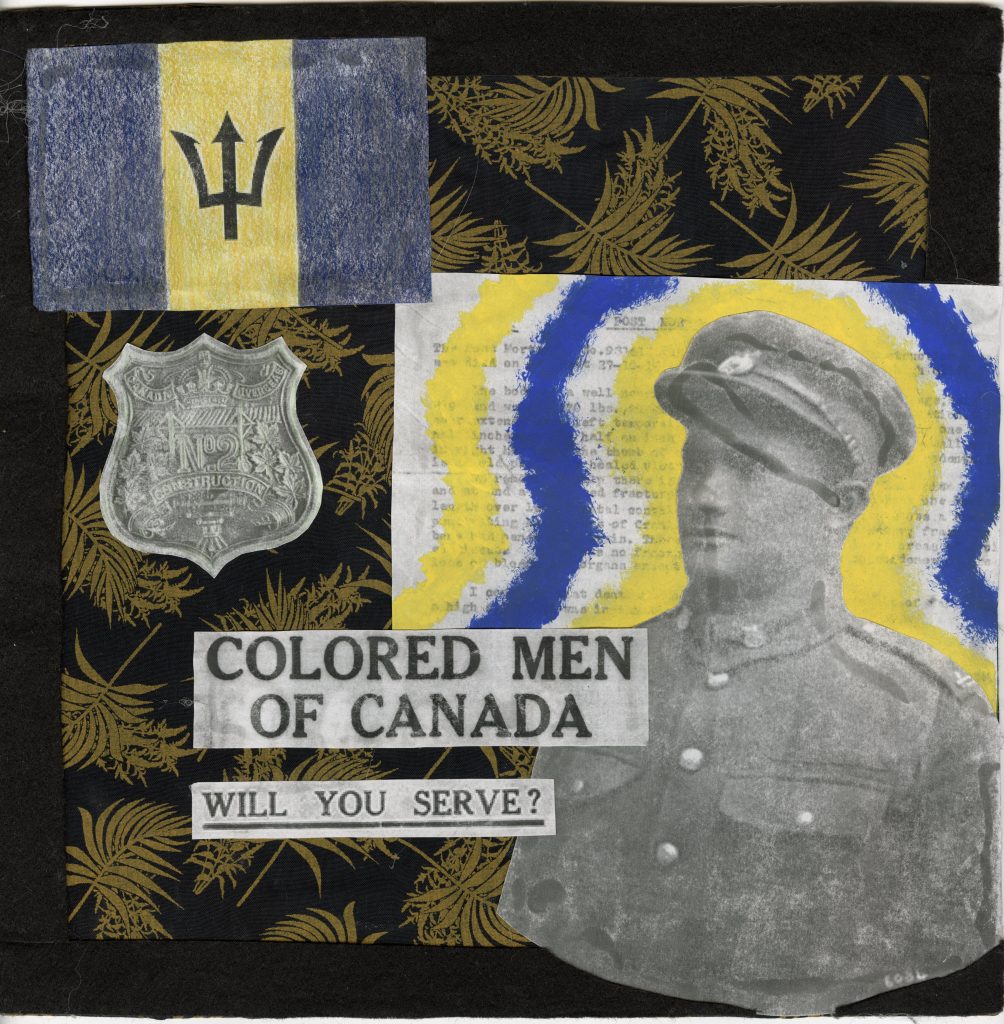
Census Records
The census is an institution that unites all Canadians. It is one of the main tools that the Canadian government uses to categorize and analyze people across the nation. However, census records do not always work in harmony with one another as each census is conducted by different people at different times, sometimes with new categories and standards for data collection. While there may be some issues with accuracy, these documents are a snapshot of the nation’s people. It is important to remember that these are historical documents influenced by the attitudes and norms of the day.
Supplementary Material
Private Sydney David (1889-1918) died in service on 10 November 1918. A Court of Inquiry was assembled in Jura on November 13th 1918, with No 2 Construction Battalion acting as witnesses. Court of Inquiry proceedings, including Edward Sealy as a witness, make up the pages 49-58 of David’s Military Record.
This additional material was consulted by Toronto Ward Museum researchers to fill in Edward Sealy’s story. Some materials are indirectly related to the soldier, but help provide a fuller understanding of who he was. What other information sources would you look for if you wanted to know more?
Learn about Izie Dora White and William Andrew White’s daughter, singer Portia May White, at Parks Canada.
Learn more about William Andrew White at The Canadian Encyclopedia.